


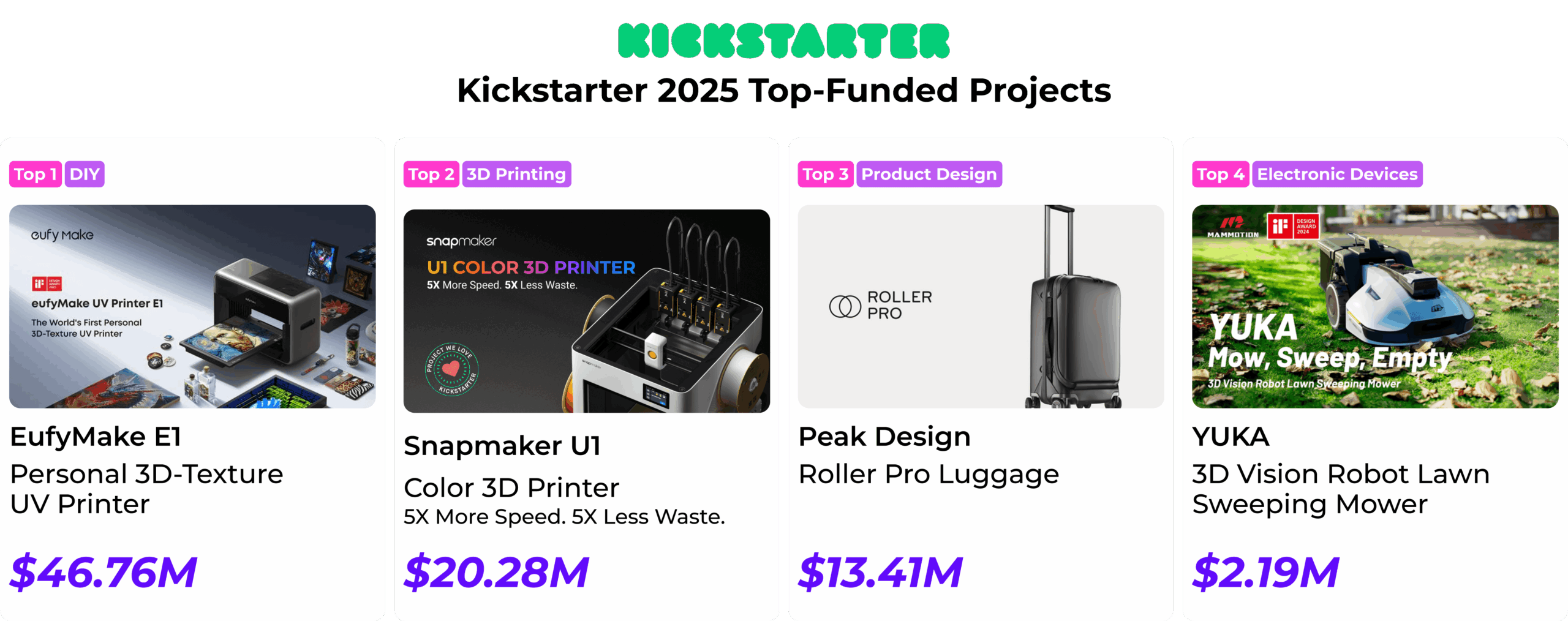
In the world of crowdfunding, the fairy tale once involved a lone inventor, but the list of the most funded projects in early to mid-2025 on Kickstarter, topped by giants like the eufy Make E1 UV Printer (a brand under Anker) and the Snapmaker U1 3D Printer, suggests a shift in the crowdfunding market. The narrative seems to have been replaced by a far more powerful force: the established brand.
These campaigns act as masterclasses in product launch strategy. Let’s take a deeper look to reveal what Naturality Digital has always emphasized: the success of a crowdfunding campaign has a lot to do with other things, but mainly with hyper-efficient market validation and community building.
The 4Ps of Crowdfunding – An Upgraded Analysis
To understand how these established players repeatedly shatter expectations, let’s answer the most basic question: how do they market themselves? To answer this question, applying insider tricks is rarely necessary; analyzing the classic 4Ps Marketing Mix model, optimized specifically for the crowdfunding landscape, will do the job.
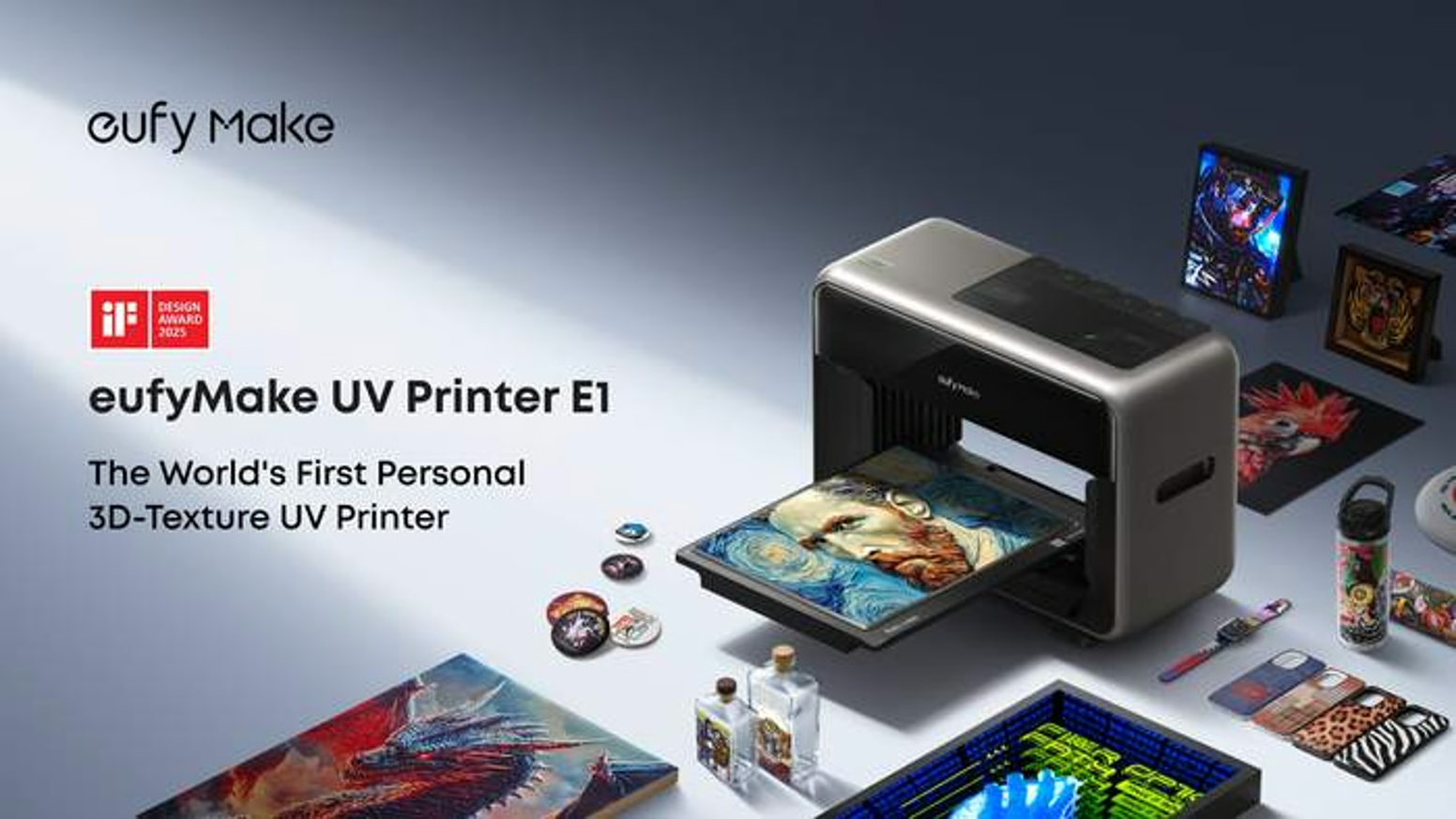
*▲eufyMake E1 Kickstarter Project , Source: eufyMake*
1. Product: Not only Better, but also Fundamentally Different
The winning campaigns succeeded because they didn’t solely offer marginal improvements; they offered category killers that either solved the industry’s most frustrating pain points or created entirely new markets.
– eufyMake E1 brought industrial-grade 3D texture UV printing to a consumer price point, creating a new market for serious hobbyists.
– Snapmaker U1 addressed the single biggest pain point in its industry: waste, by promising a “waste-free” solution to multi-color 3D printing.
– YUKA 3D Vision Robot Mower achieved success through Feature Stacking and addressing reliability. It combined mowing, self-emptying sweeping, and lawn artistry into one product, while solving the common GPS reliability issue by integrating 3D Vision (Stereo Camera). This promise of a truly reliable, multi-functional product was a game-changer for homeowners.
– Peak Design’s Roller Pro offered ecosystem integration and a feature-rich design (such as the carbon fiber handle) for a devoted base of serious travelers.
The Golden Rule
Offering a new product that is not only better, but also fundamentally different in the market is the golden rule you can repeatedly spot in projects with a high engagement rate and a good overall ROAS in their categories, such as Lofree’s Flow Lite, Hengbot Sirius, ESR Geo Wallet, Wen Times, and Edifier NeoBuds Pro’s 25th anniversary super launch. For new creators or repeated creators, a GOOD product is also the first and foremost key to winning in the competitive crowdfunding world.
2. Price: The Trust-Fueled Bait
It’s 2025 already, and we should be making this more clear than it ever has been: marketing “Cheap” is not the way towards millions. The core strategy for all successful, high-cost campaigns is to leverage brand trust to anchor an aggressive pricing strategy.
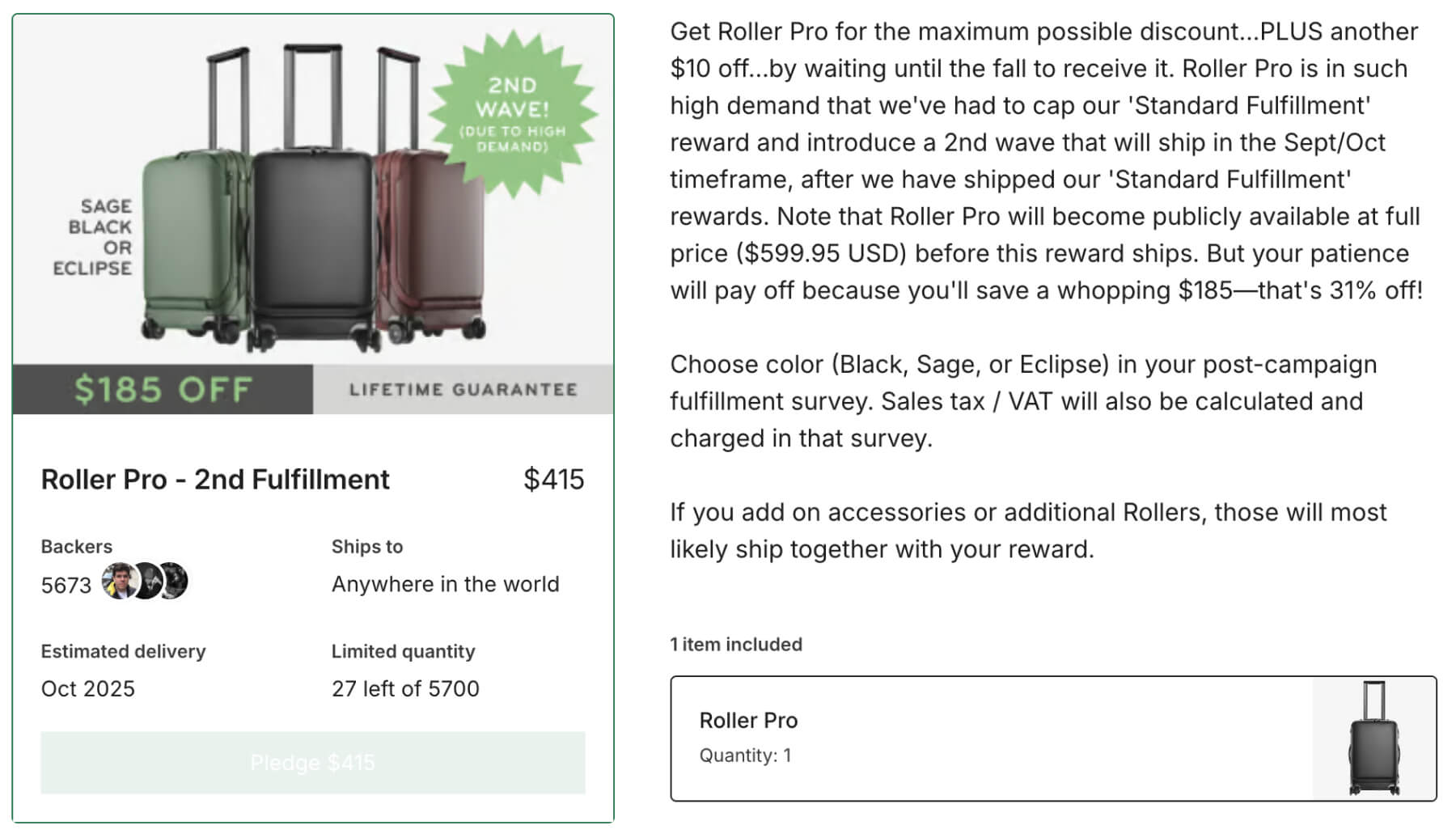
*▲Peak Design’s Roller Pro Kickstarter Project , Source: Kickstarter*
– Peak Design’s Roller Pro, starting at $415. At this price, you can probably buy two or three premium suitcases at Macy’s or on Amazon. But you can’t get a Roller Pro, a really ground-breaking suitcase, from there. This is a more than persuasive example of: once you have a Killing yet compelling product, you get the nerve to set the price even higher than the general market offers.
– EufyMake and Snapmaker use pricing to shift focus from initial cost to long-term operational savings (e.g., saving money on material waste with the U1) or to justify a brand premium (e.g., Peak Design’s lifetime warranty and high quality).
3. Place: Exclusive, Building a Long-Term Pop-Up Store and Feedback Loop
Kickstarter is no longer just a funding source for established brands; it is a meticulously managed market development environment that delivers three distinct, high-value commercial benefits far beyond the initial capital raised.
– Product Testing: For products that still have room for improvement, crowdfunding allows brands to engage a targeted user base for validation and iteration before large-scale investment. For fully mature products, crowdfunding can help generate early traction and build product reputation.
– Extended Sales Cycle (InDemand Phase): After the crowdfunding campaign ends, projects enter a “pre-order” phase, extending the sales window for 6–12 months while allowing testing of higher price points.
– Low-Cost Data Collection and Beta Testing: By interacting directly with thousands of paying users, brands can conduct high-volume, low-cost market validation and product optimization.
– Core Community Building: The first batch of paying users forms a core community that participates in future product launches, firmware updates, technical support, and word-of-mouth promotion, laying the foundation for the next stage of product marketing.
4. Promotion: Technical Validation and Community Activation
The marketing for a top campaign is a sophisticated machine fueled by data and reputation. So, from the first moment you start running your prelaunch ads to the last moment your campaign ends, keeping your community active, informed, and providing them with new information about your product and ideas continuously is crucial to growing your number of backers.
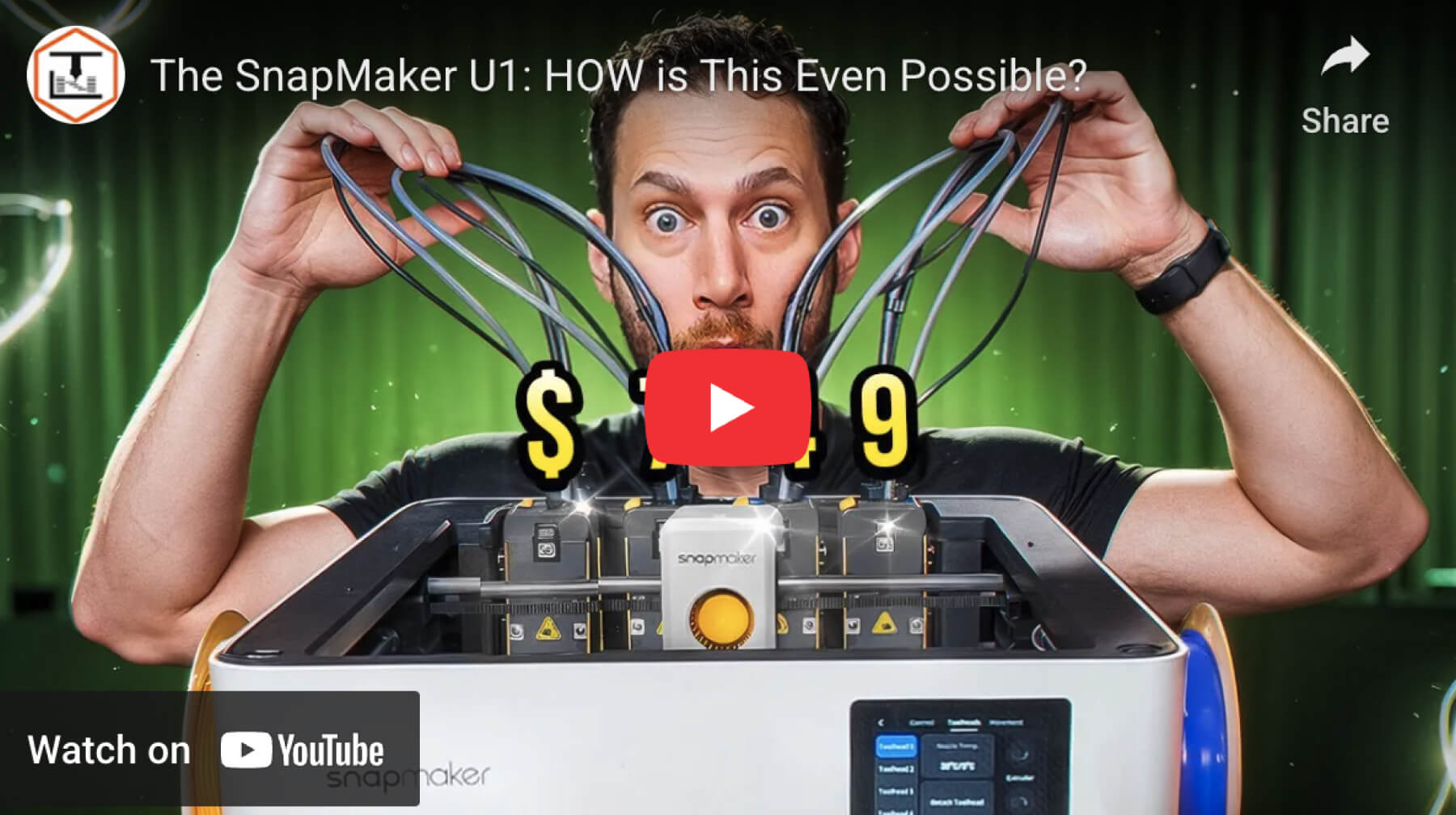
*▲Snapmaker U1 Influencer Campaign , Source: Snapmaker U1 Kickstarter Page*
– Hyper-Targeted KOLs for Technical Proof: They don’t use general influencers; they use highly trusted niche technical analysts (e.g., specialized 3D printing or robot mower reviewers) to technically validate complex claims like “waste-free printing” or “3D Vision obstacle avoidance.” This technical credibility is the rocket fuel for a high-cost product campaign.
– Pre-Launch Momentum: The strategy is to guarantee a Day-One funding surge using massive email lists of past backers, which immediately pushes the project to the top of Kickstarter’s algorithm and provides thousands of dollars in free, organic traffic.
– PR on Convenience and Status: For the YUKA Mower, PR focused on the emotional benefits of getting the homeowner’s “weekends back” and the status symbol of having the ability to “print” custom lawn designs.
The New Reality: Community Scales the Crowdfunding Blueprint
The multi-million success of the top campaigns seems to confirm that the future of crowdfunding lies in sophisticated, repeat launches. Kickstarter, by facilitating these campaigns, has cemented its status as the premier launch platform for corporate innovation, rather than the home of the scrappy inventor.
This forces us to ask: *Is crowdfunding still about funding the next small idea, or has it become the most efficient way for large companies to launch their next big product?*
Our answer is clear: This is not a sign that the platform has closed its doors to first-time creators.
Instead, the dominance of established brands proves that crowdfunding is fundamentally about trust and community, and those are assets any creator can earn. The platform remains a demanding environment that rewards creators, regardless of size, who meticulously execute on three core deliverables:
– Radical Innovation: Creating a truly new or invalidated product.
– Unwavering Trust: Proving reliability and transparency (the most direct substitute for a major brand name).
– Community Engagement: Actively building and leveraging an exclusive, invested audience.
By scaling the universal blueprints laid out by the giants, a first-time creator can still secure the funding needed to launch their dream. On Kickstarter, the most valuable assets are still credibility and community, and those are the components that ultimately scale the crowdfunding blueprint for everyone.