



Long Story Short.
In 2025, Indiegogo and Kickstarter evolved in opposite directions.
Indiegogo optimized for lower friction, higher conversion efficiency, and global scalability, positioning itself as a performance-oriented crowdfunding system.
Kickstarter doubled down on community trust, cultural depth, and fan concentration, positioning crowdfunding as a mechanism for long-term audience building rather than short-term revenue.
Choosing between the two platforms in 2026 depends less on product type and more on how a brand intends to grow.
Why Crowdfunding Platforms Changed in 2025
For global brands, 2025 was a year of structural pressure rather than incremental change.
Tariff uncertainty, supply chain volatility, rising ad costs, and tightening platform policies reshaped how brands approach product launches.
Crowdfunding, once viewed as a one-off fundraising tactic, has increasingly evolved into a market-entry and demand-validation system.
Against this backdrop, platform upgrades were not cosmetic. They reflected two fundamentally different answers to the same question:
*“Should crowdfunding optimize for conversion efficiency or for community trust?”*
Indiegogo and Kickstarter chose different paths.
Indiegogo: A Conversion-Oriented Crowdfunding System
Indiegogo’s 2025 upgrades turned pledges into a conversion system rather than a single transaction.
It forms a coherent system focused on one goal: make it easier for more people, in more countries, to complete a pledge.

*▲Indiegogo 2025 upgrades , Source: Indiegogo*
1. Removing Entry Barriers for New Backers
Visitor Follow & Guest Checkout
Indiegogo’s most consequential shift is its decision to weaken the traditional account wall. It minimizes the psychological and technical cost of participation.
– Visitors can now follow projects without creating an account.
– Guest checkout (announced and forthcoming) allows backers to pledge without registering.
This addresses one of crowdfunding’s oldest conversion leaks: forced registration. For first-time backers—especially international users—this friction often kills intent.
Combined with Indiegogo’s built-in pre-launch pages and beta-stage pre-order tools, the platform effectively offers a lightweight, platform-native preheat solution.
For creators with limited budgets, this enables market testing without maintaining separate landing pages or email systems—at the cost of giving up direct ownership of lead data.
The trade-off is, therefore, explicit: higher conversion in exchange for less control.
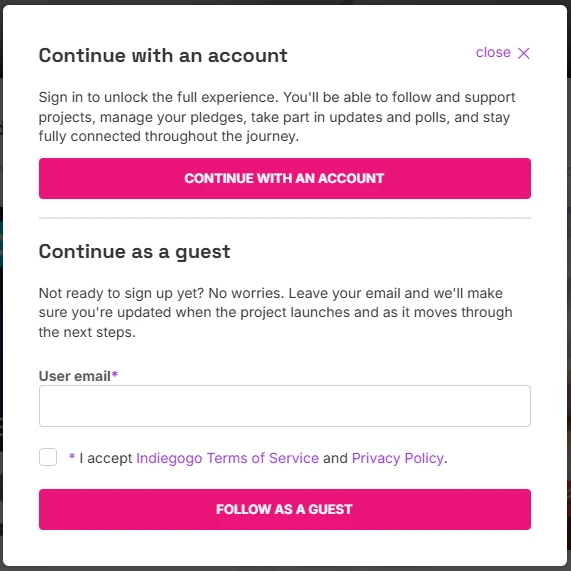
*▲Indiegogo’s Flollow-As-A-Guest , Source: Indiegogo*
2. Payment Recovery and Extended Monetization
Failed Payments Retention
Traditionally, failed payments after a campaign ends are dead weight. Indiegogo chose to treat them as recoverable intent.
After 2025:
– Failed payments are retained instead of auto-canceled
– Late Pledge is integrated directly into the campaign lifecycle
– Original crowdfunding prices are preserved post-campaign
This turns the post-campaign period into a continuation of fundraising, not a cleanup phase.
Backers get time to resolve payment issues; creators recover revenue that would otherwise be lost.
The result is structurally higher capital recovery rates and more predictable fulfillment planning—especially valuable for global campaigns where payment failures are more likely to be common.
Brands gain flexibility in inventory, logistics, and cash-flow timing.

*▲Indiegogo’s Auto-cancellation of order-dropped, Source: Indiegogo*
3. Flexible Installment Payments
Stretch Pay
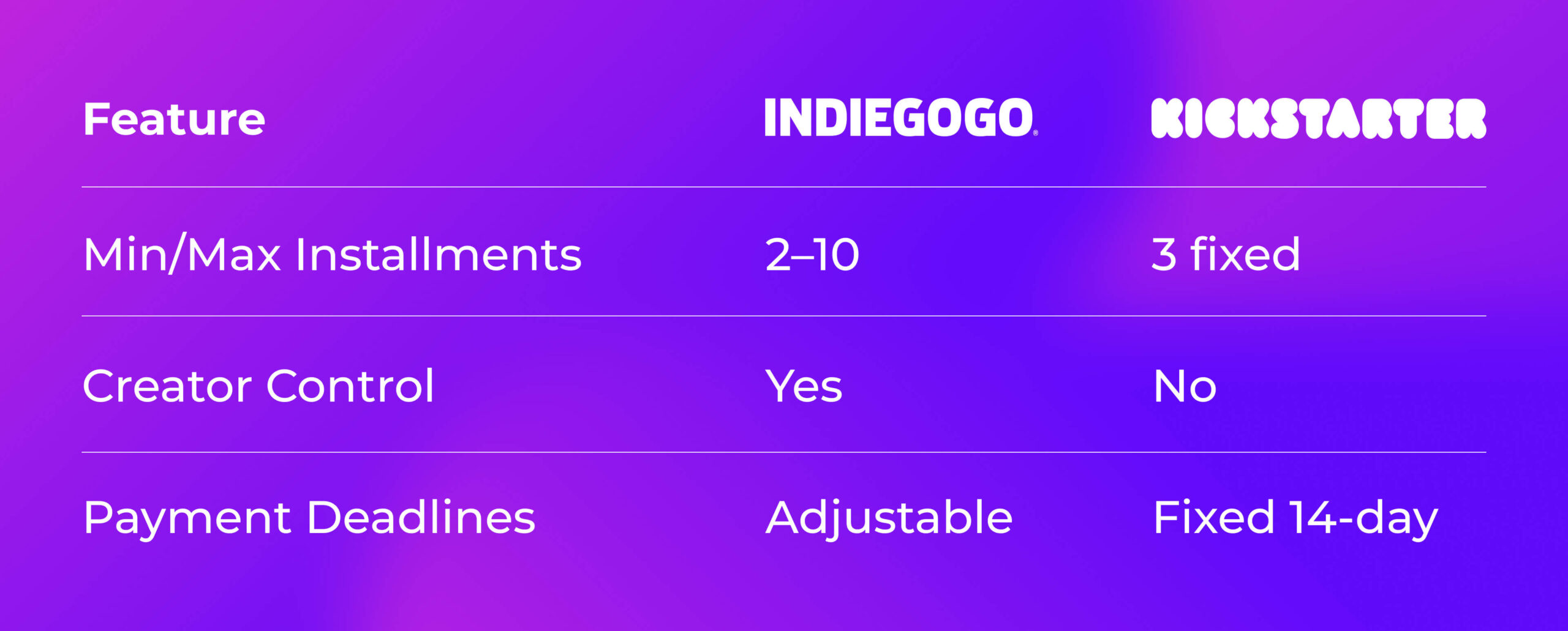
Indiegogo actively lowers the financial threshold for high-ticket pledges. Unlike Kickstarter’s fixed three-installment model, Stretch Pay lets creators shape payment cadence around their product and audience.
With Stretch Pay, Indiegogo introduces configurable installment payments:
– 2 to 10 installments
– Creator-defined minimum pledge thresholds
– Adjustable payoff deadlines
Stretch Pay reframes high-priced pledges from a one-time decision into a manageable commitment. Backers face lower upfront commitment, increasing participation in higher-AOV campaigns.
For creators, the benefit isn’t just accessibility; it’s conversion elasticity for premium tiers.
4. Optimizing for Paid Growth and Performance Marketing
Meta Conversions API (CAPI) Integration
Indiegogo supports performance marketing more deeply than most crowdfunding platforms.
Unlike Kickstarter’s largely non-configurable server-side tracking, Indiegogo allows creators to:
– Use their own Facebook Pixel
– Verify domains
– Configure server-side events via Meta Business Manager
– Deduplicate Pixel and CAPI events
In practice, this makes Indiegogo structurally more compatible with paid acquisition strategies, giving more accurate attribution and stronger optimization signals for marketing growth.
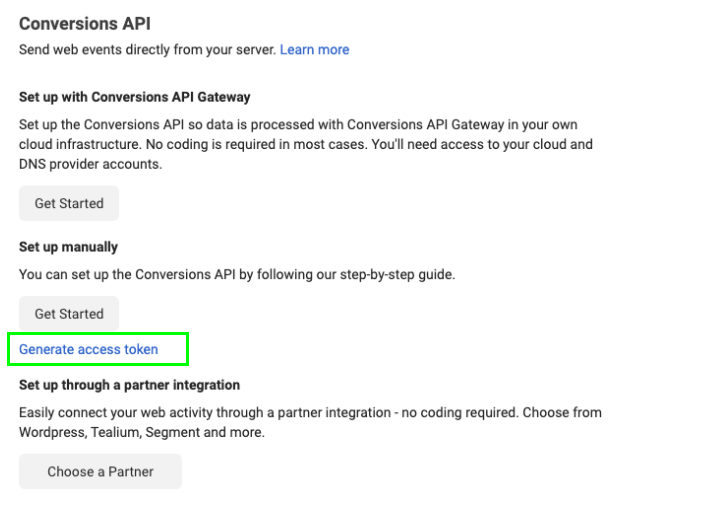
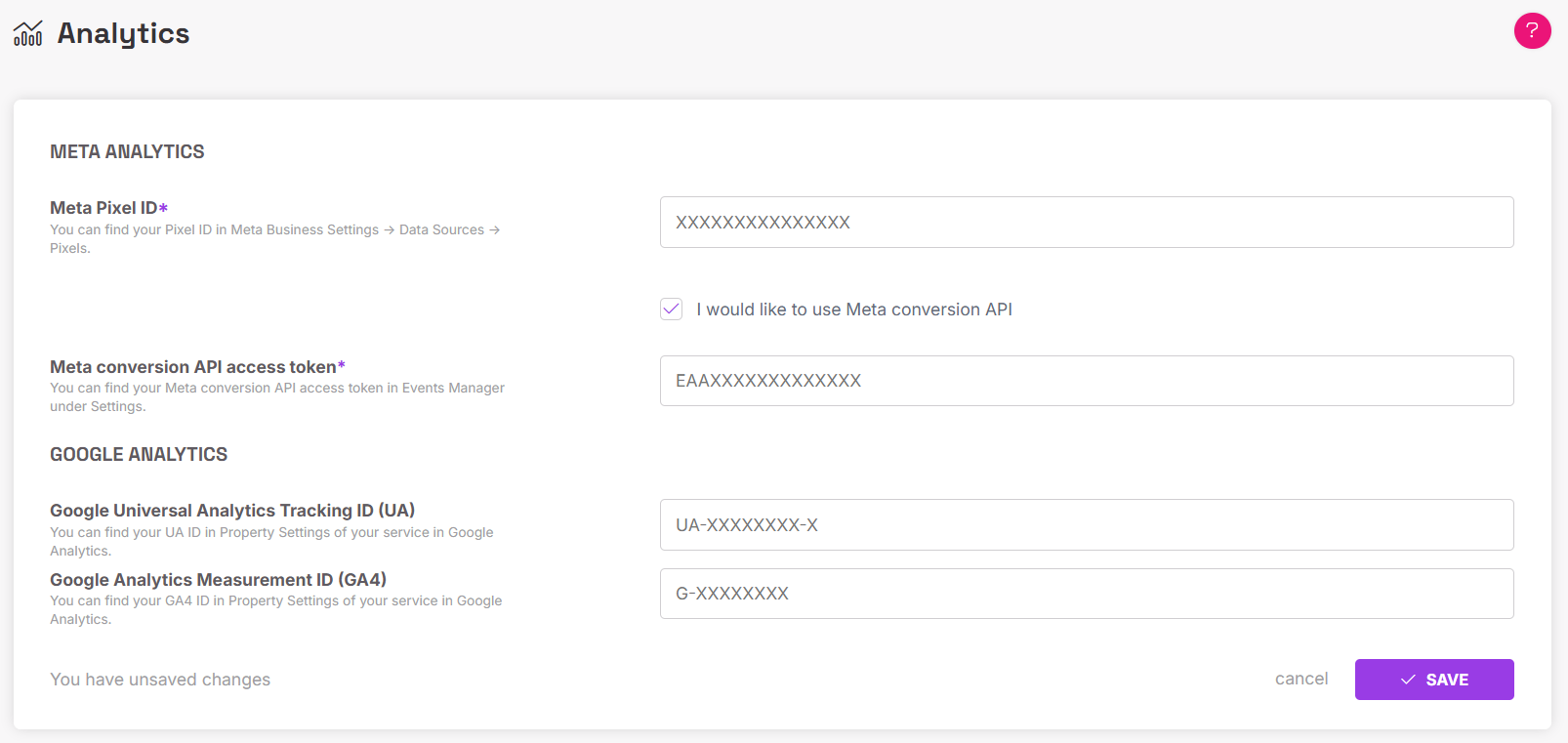
*▲Indiegogo Meta CAPI , Source: Indiegogo*
5. Scaling “Low Friction” Beyond Borders
Finally, Indiegogo extends this conversion-first philosophy globally:
– 20+ payment methods
– Apple Pay / Google Pay support
– EU & UK VAT integration
– Seamless currency handling
These are not isolated features. Fewer payment failures and compliance issues for global backers. Together, they expand who can complete a pledge: turning global interest into actual transactions.
Indiegogo scales “low friction” beyond creators to backers worldwide.
Kickstarter: Building Trust, Identity, and Long-Term Communities
Kickstarter treats crowdfunding as a social and cultural contract, not just a transaction.
Rather than optimizing every conversion edge, Kickstarter invests in systems that strengthen trust, structure, and emotional buy-in, even if that means less flexibility.
1. Pre-Launch as Community Formation
Kickstarter now activates supporters before launch, not on launch day. It fundamentally shifted when community engagement began.
Creators can now:
– Communicate with followers before launch
– Offer invite-only or highlighted rewards
– Activate supporters before Day One
This isn’t just about early momentum. It’s about identity formation. Backers arrive on launch day as engaged participants, not passive buyers.
Participation becomes social, not transactional. Momentum is social, not purely algorithmic.
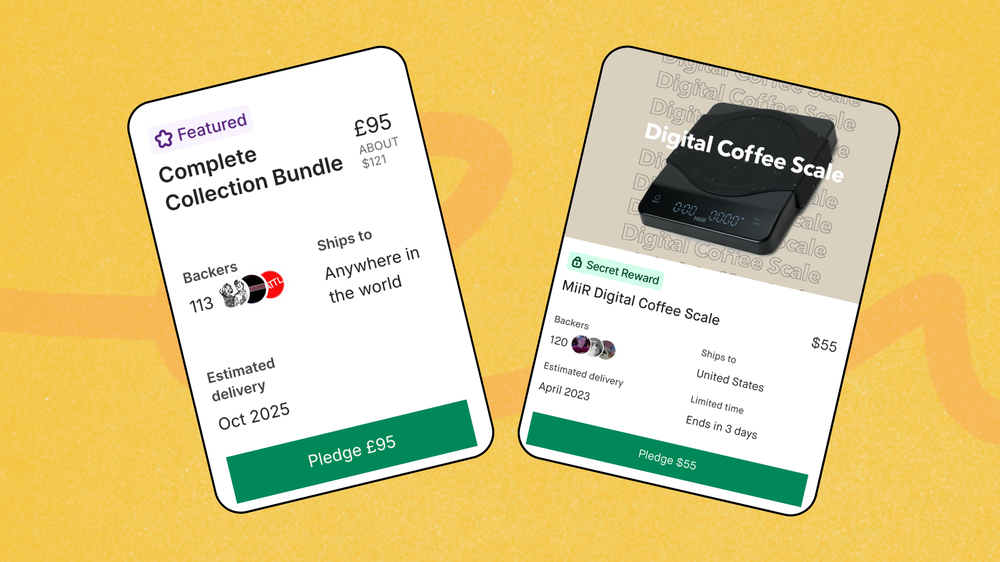
*▲Kickstarter’s Secret Reward, Source: Kickstarter*
2. Installments With Guardrails (Pledge Over Time)
Kickstarter prioritizes transparency and fulfillment reliability. Unlike Indiegogo, its installment system automatically splits payments into three parts.
The rules are strict:
– 14-day fixed payment window
– Failed payments result in dropped pledges
– Installments (Pledge Over Time) are standardized to 3 payments
This rigidity reinforces platform trust. It helps create cleaner backer lists and predictable fulfillment obligations.
Flexibility is sacrificed for predictability. Lower flexibility, but higher trust.
3. Pledge Manager as Governance Tool
While Indiegogo uses Pledge Manager to extend monetization, Kickstarter positions it as post-success governance:
– Clear cost adjustments
– Transparent communication
– Predictable fulfillment flows
Same tool category, different intent. Kickstarter optimizes for reputational stability over revenue elasticity. The pledge manager helped reduce compliance risk and provided clearer expectations for backers.
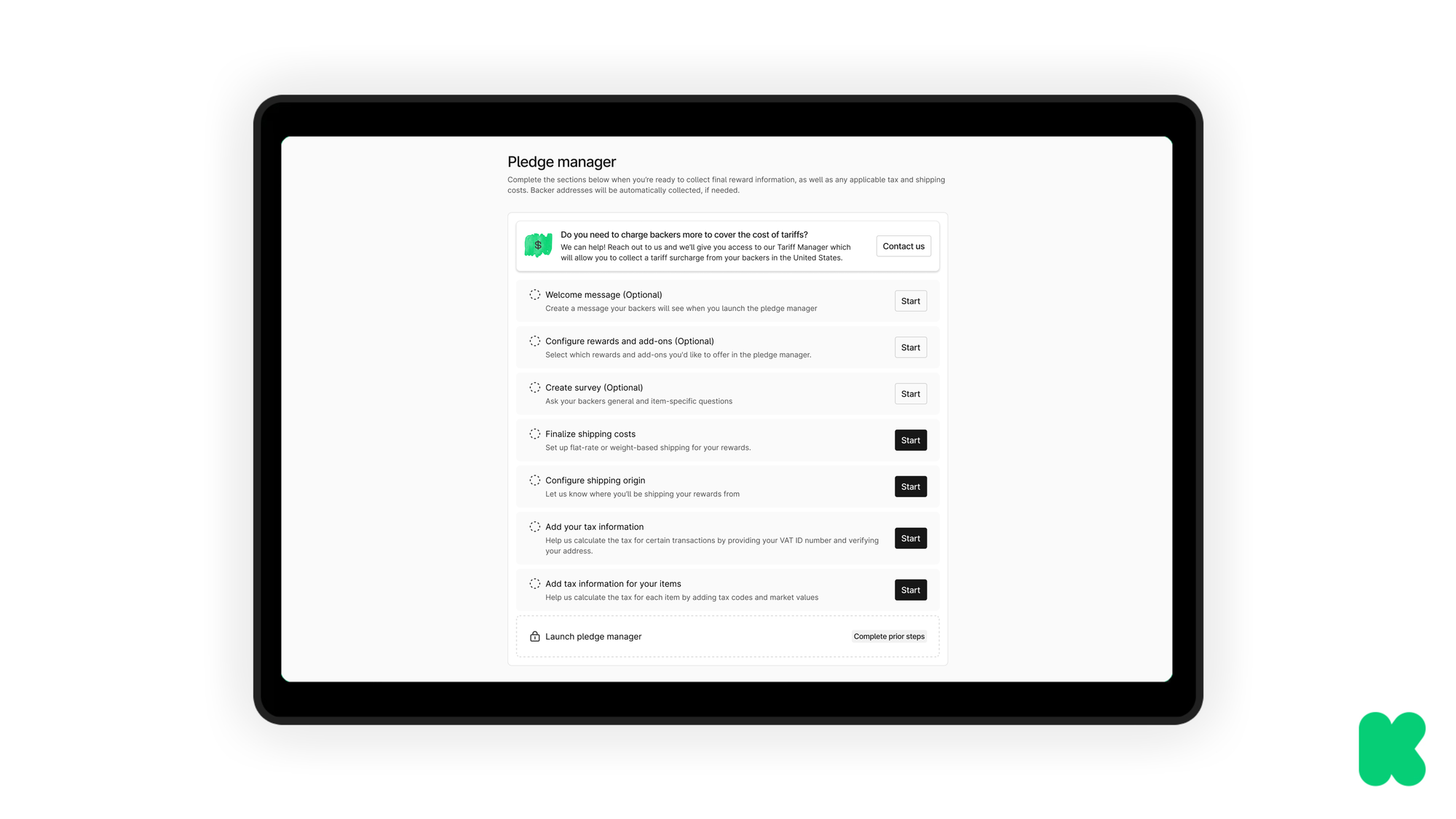
*▲Kickstarter – Pledge Manager, Source: Kickstarter*
4. Kickstarter as a Cultural Aggregator
In 2025, Kickstarter leaned further into vertical fandoms:
– Strong performance in comics, games, zines, film, and subcultures
– Initiatives like Kickstarter After Dark and FilmStream Collective
– External distribution partnerships (e.g., streaming platforms)
Projects don’t just raise funds—they gain long-term cultural visibility. Crowdfunding becomes the entry point to a lasting audience, not a standalone event.
This ecosystem turns backers into community members, and creators into cultural participants.
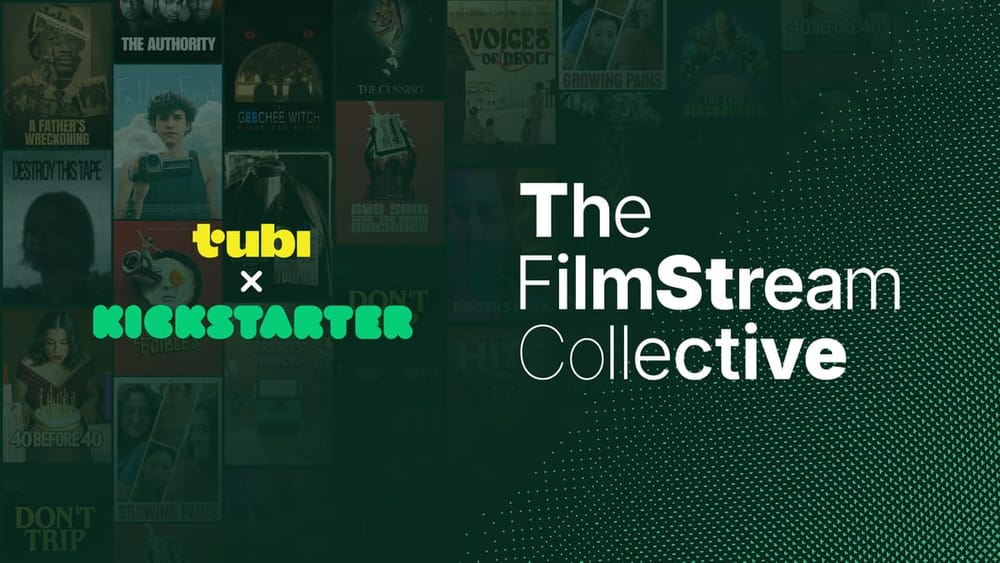
*▲Kickstarter x tubi, Source: Kickstarter*
The Strategic Contrast, Clearly Stated
By the end of 2025, the platforms represent two distinct systems:
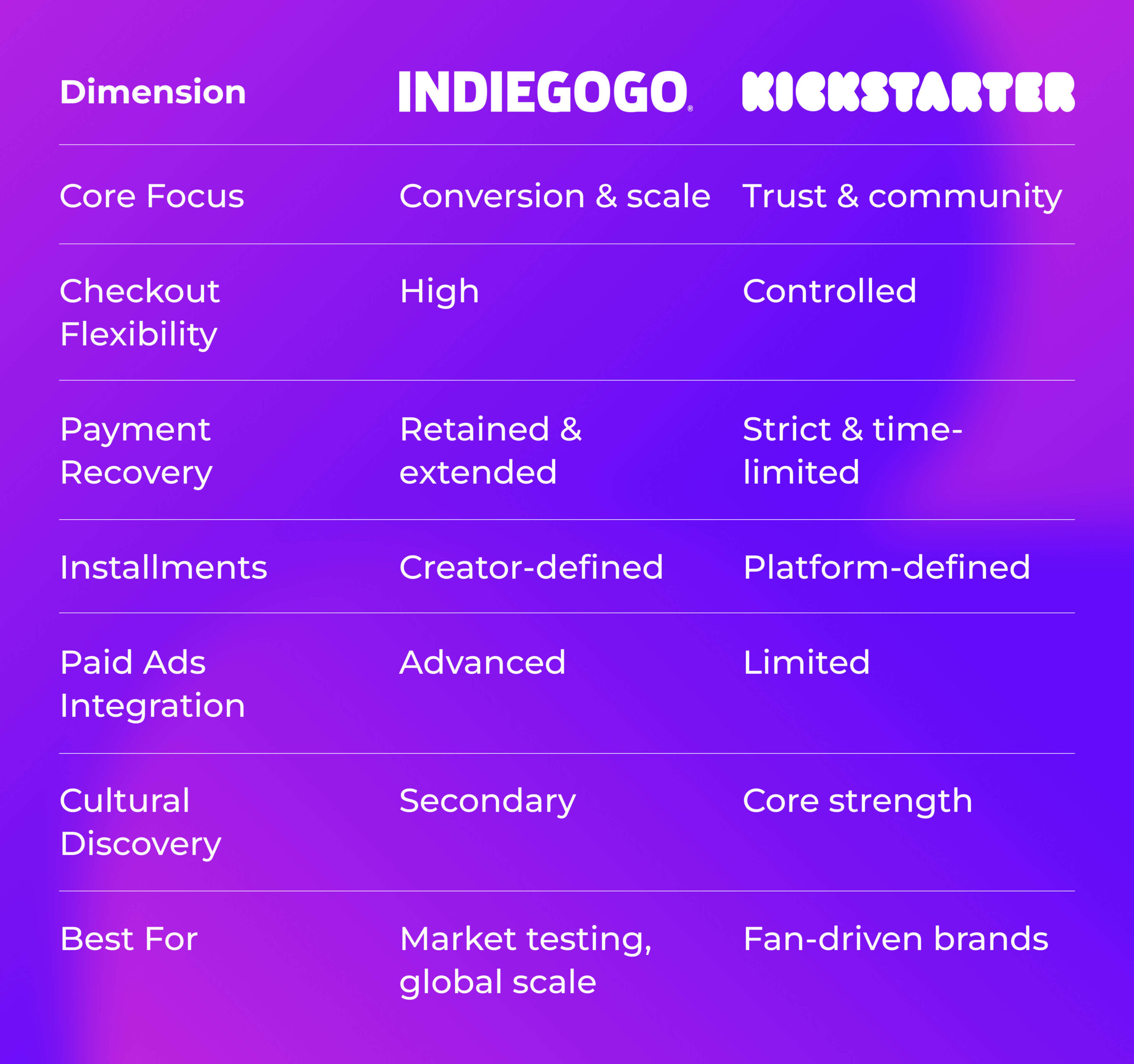
Indiegogo prioritizes reach, flexibility, and conversion efficiency. It’s optimized for global access, paid traffic, and revenue recovery.
Kickstarter prioritizes trust, identity, and community depth. It’s optimized for storytelling, fandom, and long-term brand equity.
Choosing Your Crowdfunding Path in 2026
Crowdfunding is no longer a short-term fundraising tactic; it’s a strategic system choice.
Indiegogo is optimized for reach and conversion. It excels at lowering barriers, scaling globally, and enabling flexible payment options. Brands seeking fast market testing, high-AOV product adoption, and paid acquisition strategies will find Indiegogo a performance-first platform.
Kickstarter is optimized for trust and community. It excels at pre-launch engagement, fan cultivation, and cultural discovery. Brands seeking to build deep, loyal communities, strengthen storytelling, and leverage organic discovery will find Kickstarter a fan-first platform.
Three questions to guide your choice:
– Is your primary growth driver paid acquisition or community momentum?
– Are you targeting cold global audiences or existing fan bases?
– Is the goal immediate revenue or long-term brand ecosystem building?
The answer determines which platform aligns with your strategy. The question is not which platform is “better”—it is which philosophy matches your growth trajectory.
*“Crowdfunding is no longer a sprint—it is a strategic game of reach, trust, and audience building.”*